AUTHORITIES DEMOLISH 9 STRUCTURES IN KHIRBET AR-RAHWA IN THE SOUTH HEBRON HILLS

From Rabbis for Human Rights and Operation Dove  – this article about the ongoing and systematic destruction of houses and structures in Area C of the West Bank – 38 persons lost their homes, including 21 children. The continuous displacement and loss of land and livelihood occurs on a daily basis in the West Bank, and as the Gaza massacre starts to fade from the media cycle, the opportunity to seize a thousand acres of land near Bethlehem is taken for expansion of settlements.

The following update on demolitions in Khirbet ar-Rahma comes Operation Dove, an Italian NGO that focuses on the South Hebron Hills. Khirbet ar-Rahma is a small and poor Palestinian village in Area C of the occupied territories. Since its location in Area C means it is under full Israeli control, the villagers are subjected to the Israeli military planning system that blocks almost every Palestinian attempt at building and developing within their village. Whatever is built,  is demolished every now and again, as demonstrated by this most recent demolition.  In the background of thephotos, please note the  new Jewish settlement, some of  which is illegal by the Israeli law,  but nevertheless is permitted to stay intact. This is an example of institutionalized discrimination, and demonstrates why RHR submitted an appeal to the High Court of Justice to return planning authority to the Palestinians in Area C. 

September 1 2014 demolition at Khirbet ar-Rahwa with Israeli settlement in background. PHOTO: Operation Dove

From Operation Dove:

UPDATE 2014-09-01: IDF DEMOLISHED 9 STRUCTURE IN THE VILLAGE OF KHIRBET AR-RAHWA
38 persons lost their home, 21 of them children

Khirbet ar Rahwa – On 1st of September 2014, during the afternoon, the Israeli army and the D.C.O. (District Coordination Office) entered into the palestinian village of Khirbet ar-Rahwa, in the South Hebron Hills, and demolished 3 houses (tents), 3 animal shelters and 3 toilettes. No demolition order was delivered for these structures.

September 1 2014 demolition at Khirbet ar-Rahwa in the South Hebron Hills. PHOTO: Operation Dove

All the demolished structures were built with simple materials. Ar-Rawha that is located in area C, has no access to electricity, to the water pipeline and to any kind of facilities and services.
The houses belonged to the Altal family and to the Jabaarin family. Because of the demolitions, 38 persons, 21 of them children, lost their houses. All the families are waiting for humanitarian aid.

The village of ar-Rahwa is surrounded by the settlement of Tene and the outpost of Havat Moor. This outpost received demolition order in 2000, but the D.C.O decided to not demolish any house until now. Also the outpost is connected with the electricity net and water pipelines, services that are denied for the Palestinians of ar-Rawha, who are the legal owners of the land where the settlement of Tene is located.

Festival of Friendship Refugee Week Event 2014

Refugee Week Festival Sat 21 June 2014

Refugee Week Festival Sat 21 June 2014

Only one week to go!
The Refugee Week Festival starts
12 noon in Leichhardt Town Hall, next Saturday, 21st June.
More about the Festival…

The 2014 Refugee Week Festival will support a school transport programme to help teenage girls in the remote community of Dkaika  finish high school. Currently the students have to walk for almost an hour, must walk 7km along a rough 4WD mountain track  to  the nearest high school

The situation in Dkaika
The students have to walk for almost an hour to reach the nearest junior high school and even further to a school where they complete year 12.This has lead to high dropout rates, especially for girls.

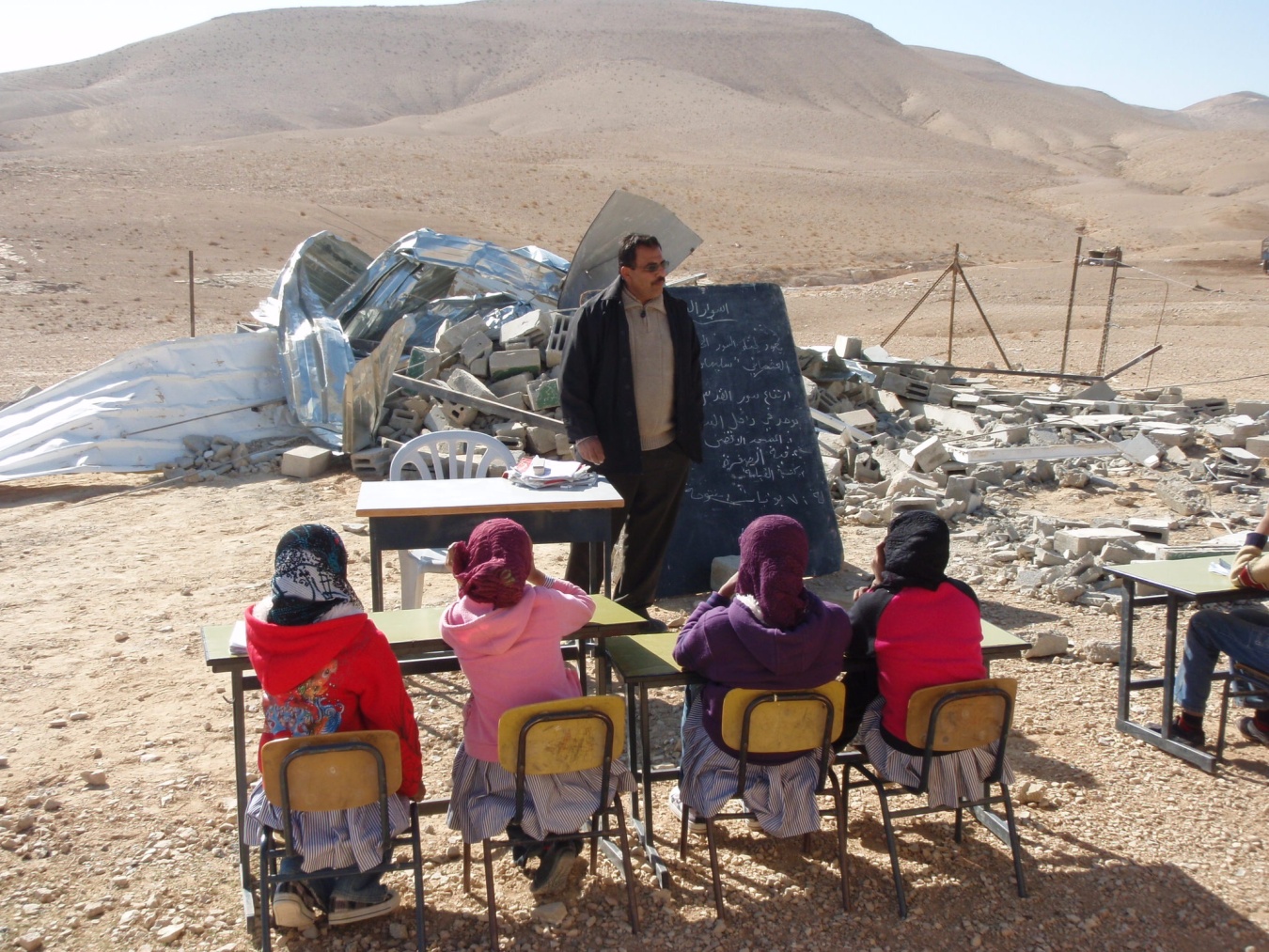
Chidren study in front of their classroom - demolished by the Israeli occupation forces.

Chidren study in front of their classroom – demolished by the Israeli occupation forces.

The solution identified by the community is a school transport plan and with your support, we can help them achieve this.

You can help support the students of Dkaika by coming to our Refugee Week Festival, which will be held on Saturday, 21st June, in Leichhardt Town Hall. The money raised will pay the wages of a driver and we hope, the running costs of the vehicle, to take students to high school and university.

To read a full report about the village and our proposed project to support education access to the community click here.
For Festival details, email hebronleichhardt@gmail.com.
Donations are welcome and can be made here.

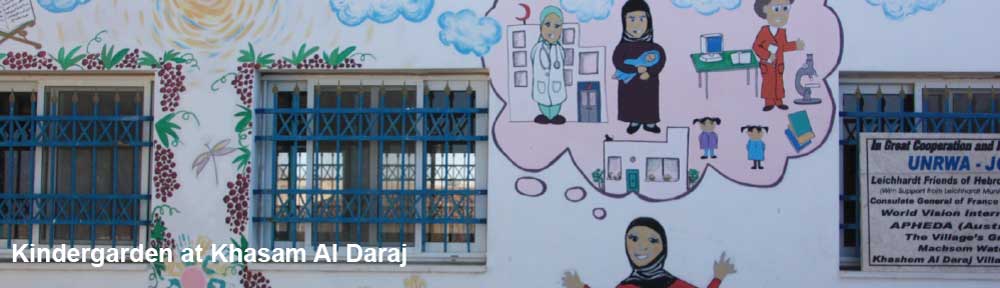
Leichhardt Friends of Hebron have been successful in supporting the establishment of three kindergarten facilities in Hebron and the South Hebron Hills. Through our partnership with the Hebron International Resource Network (HIRN) we are working with some of the most impoverished, vulnerable and threatened communities in the area.

Dkaika is one of these, an isolated and vulnerable community in the far south of Palestine, only metres from the boundary with Israel. Sadly, the community faces a targeted campaign of isolation and destruction from the Israeli Army.

The Israeli authorities are threatening to demolish 35 homes and buildings, including at least one classroom. At least 4 homes and one classroom have already been demolished.

They also prevent the community from accessing the most basic services, including electricity and running water although these are provided to Israeli residents of nearby illegal settlements. Despite the hardship this causes, people feel able to remain on their traditional lands as long as their children have access to education, which is highly valued in Palestine people.

Since 2009, Leichhardt Friends of Hebron have been successful in supporting the establishment of three kindergarten facilities in Hebron and the South Hebron Hills. Through our partnership with the Hebron International Resource Network (HIRN) we are working with some of the most impoverished, vulnerable and threatened communities in the area.


Protection of Civilians Report

The United Nations Office for the Coordination Humanitarian Affairs (UNOCHA) publishes weekly reports of demolitions and violence that are occurring in the occupied Palestinian territories. In the week of October 31 – November 6, the number of Palestinian structures that were demolished (including East Jerusalem) were:

Demolished: 81

Demolished in 2012: 557
Of which residences: 139
People displaced in 2012: 1,006
2012 vs. 2011 demolitions (weekly av.): 12 vs. 12
2012 vs. 2011 people displaced (weekly av.): 20 vs. 21

Operation Dove, present in the South Hebron Hills were present at a recent home demolition in Derath and Jawaya.

On November 6th the Israeli army demolished one house and a stumble in the Palestinian village of Derath; afterward it demolished a house and a water cistern in the Palestinian village of Jawaya, South Hebron Hills, West Bank.
Around 6.45 am three DCO (District Coordination Office) cars, two demolition machines and one bulldozer broke in Derath village escorted by four Border Police jeeps and one army vehicle. First it was demolished a two floors house still under construction owned by Mohammad Musa Mohammad Abu Aram, then they moved to demolish a metal sheep’s stumble.
At about 9 am the vehicles proceeded to Jawaya village, demolished a house and destroyed a water cistern, used to collect rain water; both owned by Mahmud Ahmed Nasser Nawaja. In the South Hebron Hills area water supply is particularly critical. According to the owner, in 2011 the DCO delivered only a stop working order for those two structures.
The two Palestinian villages are located in Area C, under Israeli military and civil administration. According to OCHA oPt (UN Office for the Coordination of Humanitarian Affairs in occupied Palestinian territory) construction is prohibited for Palestinians in some 70% of Area C, while in the remaining 30%, a range of restrictions eliminate the possibility of obtaining a building permit.
The policies enforced by the Israeli authorities in Area C restrict the possibility to access to basic needs for the residents and prevent environment and development of Palestinian communities. An OCHA Opt research shows that in some communities families are being forced to move as a result of Israeli policies applied in Area C