Humanitarian agencies salute the work of Human Rights Defenders in Hebron on the occasion of International Human Rights Day

Jerusalem, 10 December 2015

“UNRWA teachers, social workers and mental health counsellors across the West Bank are reporting extremely high levels of stress and trauma. If no action is taken an entire generation of children and youth will be lost. Their future must be restored.”

On the occasion of Human Rights Day, the UN Coordinator for Humanitarian Aid and Development Activities, Robert Piper and a group of UN and NGO leaders visited Hebron this week to see first-hand the situation of human rights defenders in Hebron, as well as the obstacles to Palestinian children’s right to an education in a safe environment. During the visit, the delegation spent time in the Israeli-controlled areas of Hebron (H2). The delegation was briefed by organizations providing a ‘protective presence’ for Palestinians. As part of their work, these organizations monitor and document access at checkpoints and accompany children to and from schools in areas where they are subject to frequent settler harassment and violence.

James Heenan of the UN Office of the High Commissioner for Human Rights recalled that human rights defenders have the right to pursue peaceful activities to protect the rights of others, and in turn to be protected in doing so. “The fact that these very people have themselves become a target is alarming,” he said. The visit also took them to Qurtuba school, where protective presence actors accompany some 100 children through check points to and from school every day. At the school, teachers reported that students these days are unable to concentrate and show signs of psychosocial distress and that they are terrified walking through checkpoints to and from school. Felipe Sanchez, Director of UNRWA Operations West Bank, confirmed this, saying “UNRWA teachers, social workers and mental health counsellors across the West Bank are reporting extremely high levels of stress and trauma. If no action is taken an entire generation of children and youth will be lost. Their future must be restored.”

In the current wave of violence, Hebron city has had the highest number of Palestinian casualties in a single locality in the oPt, and increased movement restrictions have affected access to services and places of work throughout the city. Of particular concern is the impact of the violence and the restrictions on the access of children to school due to checkpoints. 4,200 children pass through checkpoints on their way to and from school in Hebron every day. In this context, the reliance on protective presence actors has only become more acute. During this period, obstruction by settlers and Israeli Security Forces of international organizations and local groups attempting to provide a protective presence and documenting human rights violations has also increased. Staff of these organizations have been subjected to physical attacks, arrest, threats by settlers and anonymous death threats. Three of the four organizations providing protective presence have even been obliged to temporarily pull out of H2 at times in October as a result of the threats. Since 3 November, the implementation of a closed military zone in H2 has further prevented these organizations from doing their vital work. “Human rights defenders play a vital role in promoting human rights,” said Mr. Piper after the visit. “Protective presence organizations are on the front line of this work in the occupied Palestinian territory, embodying the support of the world community to the people of Hebron and defending the rights of Palestinian children, not least to a safe journey to and from school. They must be allowed to continue their work without violence, threats or retaliation.”

For more information, please contact Ms. Hayat Abu-Saleh at abusaleh@un.org or +972 54 33 11 816.

AL-KHALIL (HEBRON): No safety for Palestinian children walking to school in Hebron

As the violence continues on the streets of Occupied East Jerusalem and the West Bank, we need to keep in mind, first and foremost, that what is occurring in the West Bank is not a reaction to an incident that happened a week ago, or two weeks ago. It is the ongoing resistance against the seizure and occupation of lands that started in 1948. The military occupation has been in place since 1967, and this short video is a reminder that the one key message that is consistently omitted from news broadcasts is the fact that Palestinians live under occupation.

The following account from the Christian Peacemaker Team in Hebron gives an account of the trauma and risk that students are facing, and the restrictions on their freedom of movement:

[The following release has been adapted for CPTnet. The original is available on CPT Palestine’swebsite.]

In the first ten days of October, Israeli forces fired more than 143 teargas canisters, as Palestinian children walked to and from school, as well as five stun grenades, from two military checkpoints (approximately 0.3 miles apart) in the H2 section of Hebron. On two of those ten days, Israeli forces also fired rubber-coated steel bullets into a crowd of children (one killed 13 year-old Ahmad Sharaka near Ramallah this week). Two Palestinian children in this area were hospitalised as a result of excessive teargas inhalation on their walk to school on 12.10.15.

In the past week, Israeli forces ambushed and arrested two boys aged 11 and 12 after school on 13.10.15 (see video and full account here). Article 37 of the Convention on the Rights of the Child, states that child arrest is in clear violation of human rights law.

The presence of school children does nothing to deter the Israeli military from this relentless use of teargas, stun grenades, rubber-coated steel bullets, detention and arrest.  They are entirely preoccupied with a collection of those children, occupied, harassed and humiliated their entire lives, throwing stones at the heavily armed grown men occupying checkpoints and rooftops.

One Israeli Border Policeman recently told CPTers that the Israeli military supposedly “keeps the children safe”, and that “the little ones can go to the school safely.” Soon after, another Border Policeman fired a steel-coated rubber bullet into a crowd of small boys throwing stones at a soldier on an occupied rooftop who felt so little threat he was wearing no helmet. Meanwhile the day before a total of 81 teargas canisters had been fired in a similar scenario at this checkpoint (Qitoun). See video here.

Such military repression is far from abnormal in H2 Hebron. However, as physical and fatal violence has intensified in these tense first two weeks of October—during which 30 Palestinians have been killed by Israeli forces, 1300 have been injured by live ammunition and rubber-coated steel bullets, with four Israelis killed and 67 injured by Palestinians.  Other forms of military repression have also increased, evident in the increased use of physical force and child arrest at school time.

In this context, the little ones, as young as the four-year-olds we walk to kindergarten– cannot walk to school safely as a Border Police man told a CPTer they could. In fact, one of our little friends we walk to kindergarten had to hold his jumper over his nose to avoid the sting of teargas as he left his home on Monday this week. Firing over 143 teargas canisters, five stun grenades, rubber-coated steel bullets and arresting minors is, however, supposedly the Israeli military’s approach to safety when it comes to Palestinian children.

Education under occupation

The 25th of February marks the anniversary of the massacre that took place at the Ibrahimi Mosque, in 1994, where 29 Palestinians were shot dead, and another 129 were left wounded. The massacre was committed by a Jewish doctor – an immigrant from the United States and resulted in prolonged curfews, restrictions on movement for Palestinians, the closing of their shops and marketplaces, and a pattern of impunity for settler violence. Since then Israel has continued with its policy of punishing those who are being attacked.

The center of the city is deserted and in ruins. You have to visit there, repeatedly, in order to begin to understand not only how it looks but the understand the  impact of the 120 blockades and checkpoints that cut off abandoned streets in the middle in the centre of the Old City.

This video was made by the Ecumenical Accompaniment Program in Palestine and Israel, documenting education under occupation through the eyes of some young students and teachers in Hebron.

https://vimeo.com/116338150


Living in the path of settlers

There is a military watch box on the roof of the Shamsiya house, making the roof a closed military zone and the family is forbidden to access it. For security reasons the Israeli military will search the house on a regular basis. On Saturdays, there is a tour for settlers through Hebron and the settlers from the Tel Rumeida settlement walk past the Shamsiya house. They access the roof and have damaged the water tanks. They throw stones at the family below and their daughter was knocked unconscious after being hit by a rock thrown by a settler. The Israeli military do not stop the settlers from being on the roof. The family are part of the “shoot back” camera project, run by the Israeli Human Rights organisation B’tselem. Vulnerable families are given cameras to document attacks on them and their property.

In the following 9 minute film, Yuval Orr shows what the daily life is like for 15-year-old Awni Abu Shamsiya as he attempts to maintain some shred of normalcy in his hometown of Hebron.

School children in Hebron don’t battle traffic jams, they battle tear gas

Stun grenades at children

Since the beginning of the school year in August over one hundred tear gas grenades have been used against the children. Tear gas works by irritating mucous membranes in the eyes, nose, mouth and lungs, and causes crying, sneezing, coughing, difficulty breathing, pain in the eyes, and temporary blindness.

2nd October 2014 | International Solidarity Movement | Hebron, Occupied Palestine

“The child are having problems concentrating on their school work due to their emotional state and the stress due to the daily attacks by the occupation forces, which are continuously escalating.” Stated Hebron teacher, Shukri Zaroo, to the International Solidarity Movement (ISM).

Children in al-Khalil (Hebron) are forced to pass through a military checkpoint each morning and afternoon in order to reach and leave their schools. International activists try to monitor these military checkpoints, both to document the events and to stand with the children.

ISM activists monitor the Salaymeh checkpoint (29) each school day morning and afternoon. Since school began on August 24th, this is what the ISM activists have witnessed:

August 25thIsraeli forces fired 15 tear gas grenades and canisters, as well as five stun grenades at children as they waited to go to school. Tear gas drifted into the courtyard and many children and teachers choked and spluttered in the playground. School was delayed for over an hour. At one point a Red Crescent ambulance had to be called as two teachers and two children, aged 10 and 12-years-old, required medical treatment for excessive tear gas inhalation.

For the full story of what has been going on in Hebron at the start of the school year, click here.

This video shows the children in the midst of being fired upon with tear gas by soldiers.

https://www.youtube.com/watch?v=QdhDVxHbDg8#t=70


Festival of Friendship Refugee Week Event 2014

Refugee Week Festival Sat 21 June 2014

Refugee Week Festival Sat 21 June 2014

Only one week to go!
The Refugee Week Festival starts
12 noon in Leichhardt Town Hall, next Saturday, 21st June.
More about the Festival…

The 2014 Refugee Week Festival will support a school transport programme to help teenage girls in the remote community of Dkaika  finish high school. Currently the students have to walk for almost an hour, must walk 7km along a rough 4WD mountain track  to  the nearest high school

The situation in Dkaika
The students have to walk for almost an hour to reach the nearest junior high school and even further to a school where they complete year 12.This has lead to high dropout rates, especially for girls.

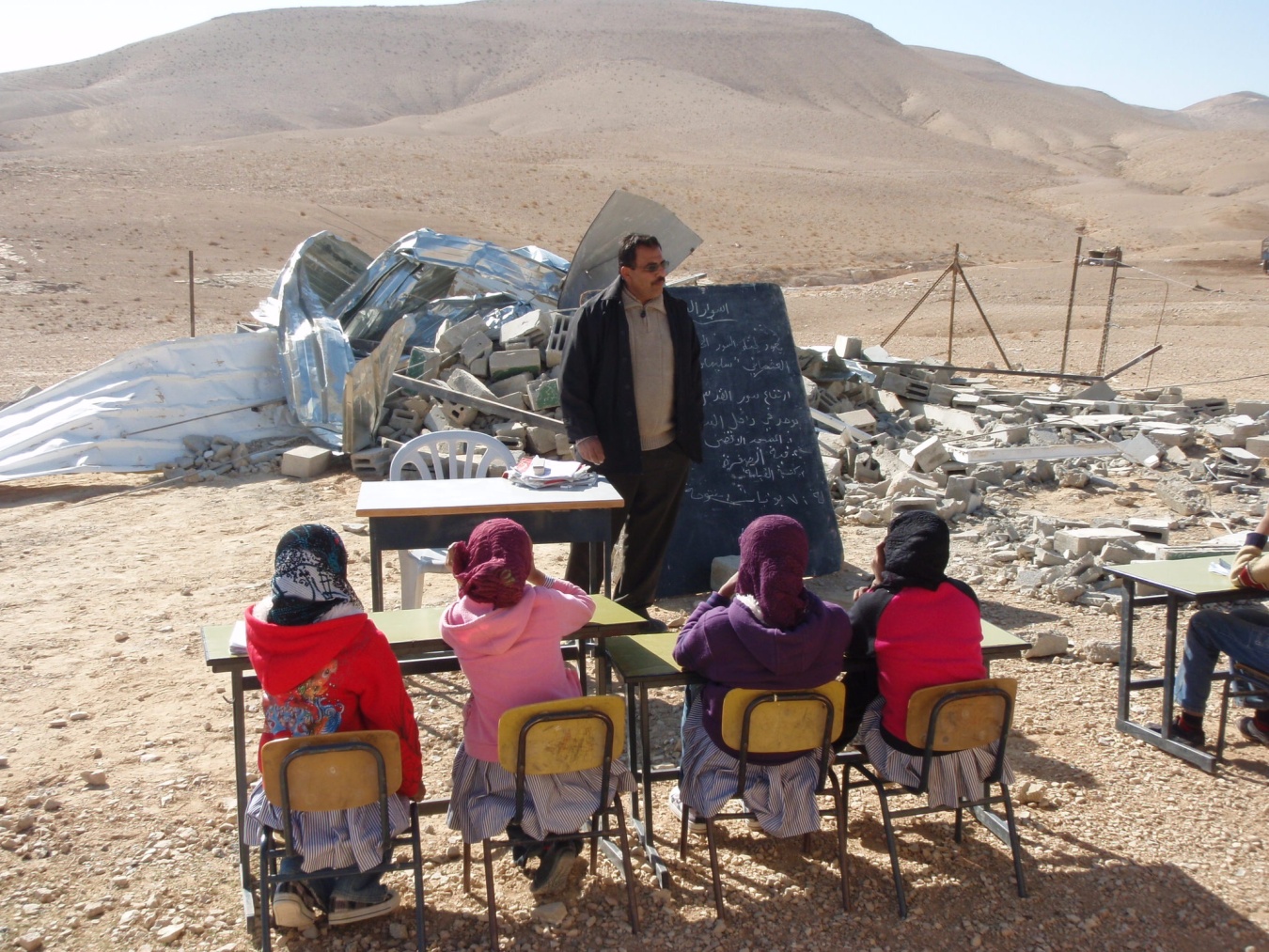
Chidren study in front of their classroom - demolished by the Israeli occupation forces.

Chidren study in front of their classroom – demolished by the Israeli occupation forces.

The solution identified by the community is a school transport plan and with your support, we can help them achieve this.

You can help support the students of Dkaika by coming to our Refugee Week Festival, which will be held on Saturday, 21st June, in Leichhardt Town Hall. The money raised will pay the wages of a driver and we hope, the running costs of the vehicle, to take students to high school and university.

To read a full report about the village and our proposed project to support education access to the community click here.
For Festival details, email hebronleichhardt@gmail.com.
Donations are welcome and can be made here.

Leichhardt Friends of Hebron have been successful in supporting the establishment of three kindergarten facilities in Hebron and the South Hebron Hills. Through our partnership with the Hebron International Resource Network (HIRN) we are working with some of the most impoverished, vulnerable and threatened communities in the area.

Dkaika is one of these, an isolated and vulnerable community in the far south of Palestine, only metres from the boundary with Israel. Sadly, the community faces a targeted campaign of isolation and destruction from the Israeli Army.

The Israeli authorities are threatening to demolish 35 homes and buildings, including at least one classroom. At least 4 homes and one classroom have already been demolished.

They also prevent the community from accessing the most basic services, including electricity and running water although these are provided to Israeli residents of nearby illegal settlements. Despite the hardship this causes, people feel able to remain on their traditional lands as long as their children have access to education, which is highly valued in Palestine people.

Since 2009, Leichhardt Friends of Hebron have been successful in supporting the establishment of three kindergarten facilities in Hebron and the South Hebron Hills. Through our partnership with the Hebron International Resource Network (HIRN) we are working with some of the most impoverished, vulnerable and threatened communities in the area.


SOUTH HEBRON HILLS: Israeli military detains driver, confiscates vehicle donated for transport of schoolchildren in South Hebron Hills

Children being denied an education due to the restrictions on movement imposed on Palestinians in the South Hebron Hills. Due to the restrictions of movement around settlements and firing zones, Palestinians are required to make large detours to get to their destination, or are denied permits to drive vehicles. The UNOCHA report on West Bank movement and access (Special Focus) details the impacts on both urban and rural communities of these restrictions.

This story from the Christian Peacemaker Teams based in the South Hebron Hills describes the impacts on education these punitive measures are having:


On 18 November 2013 at 11:00, Mufid Abu Qbeita—the driver for the students who live in the South Hebron Hills area that the Israeli military has designated as “Firing Zone 918”—was driving children back to their homes from Al Fakheit school.  Israeli Security Forces and representatives of the Israeli Civil Administration stopped him near Al-Sfai, one of the villages in the Firing Zone, while he had a child in the car.

Soldiers took his ID and detained him for thirty minutes; afterwards, they told him to follow them to Gush Etzion Police Station.  Two soldiers accompanied Abu Qbeita in the car.  He had to leave the child in Al-Sfai.

Abu Qbeita informed the soldiers that the jeep belonged to the Palestinian Ministry of Education and was donated by Japan, but they still forced him to drive to the settlement of Gush Etzion.  After several hours, they released him, but the jeep remains at the police station.  When Abu Qbeita asked why the soldiers had confiscated the jeep, they answered, “Because you were driving in the firing zone of the South Hebron Hills which is not allowed.”

CPT, EAPPI and Operation Dove take turns accompanying Abu Qbeita and the SUV from the city of Yatta into the Firing Zone during the week, in order to prevent incidents like the above occurring, but until recently, once in the zone, he had not faced problems.  On 27 October, eight Israeli soldiers detained him, verbally abused him, and then beat him on his abdomen, face, and back.  Afterwards, they forced him drive over spikes used to stop vehicles at army checkpoints to puncture the SUV’s tires.

Soldiers’ refusal to abide by open-fire regulations result in serious injury to children

The ongoing use of force against children continues in occupied Palestine, with children continually falling victim to serious injury. A young boy, South of Hebron, loses an eye when he is hit by a rubber-coated steel bullet in the face: 


(MaanImages)
 
HEBRON (Ma’an) — Israeli forces shot 6-year-old Musab al-Sarahneh in the eye in al-Fawwar refugee camp south of Hebron early last week, his family reported. 

The boy lost his right eye after Israeli forces opened fire on the car he was traveling in with rubber-coated steel bullets, according to the family’s account. 

At the time, last Friday, Musab was sitting in a car holding his mother’s hand as they made their way home, his family says. Read more here.

 
Defence for Children International – Palestine interviewed a number of children that have been injured through the lax enforcement of open-fire regulations by the Israeli military. As serious injuries continue to be inflicted on children, there is little recourse to seek justice when soldiers disobey their regulations. In fact, of all complaints filed against the army, only 5% have led to indictments. The following article goes into more depth about the rules of engagement, and tells the story of Atta, who was shot directly, while retrieving his school bag, and the tragedy that unfolded:


The bullet struck Atta Sabah, 12, in the stomach and exited through his back, severing his spinal cord and causing paralysis from the waist down.
 

With high numbers of demonstrations occurring throughout the West Bank during the first six months of 2013, lax enforcement of the Israeli army’s open-fire regulations has led to increased violence against Palestinian civilians and has perpetuated impunity.


The regulations allow soldiers to use live ammunition “only under circumstances of real mortal danger,” according to a recent report by B’Tselem, an Israeli human rights group.


Israeli forces are prohibited from firing rubber-coated metal bullets at women and children. Where firing rubber-coated metal bullets is allowed, police and military procedures state that they must only be fired from a distance of 50-60 meters (165 – 195 feet) and at the legs of people.The regulations prohibit directly targeting demonstrators with tear-gas canisters. Read the full story here

Children blocked from returning home after collecting food from soup kitchen

The Christian Peacemaker Teams are on the ground, daily, in the Old City of Hebron. They are observers and photograph and document violations and tensions in the Old City and Hebron Governorate. Read this story to see how the border police are continuously harassing the residents of the Old City, including impeding their ability to move freely:

Because of the dire economic situation in the Old City in Hebron every day children go to the Ibrahimi Mosque soup-kitchen to get food. Walking out through the mosque checkpoint shortly after noon on Sunday 26 May, I was surprised by the number of people standing at the other end of the checkpoint.

Upon passing out through the checkpoint I realized that the turnstile to enter the mosque area was closed and nobody was being allowed through. A dozen young boys held plastic tubs of soup they had collected at the soup kitchen. They told us they had been waiting for around half an hour. Read more here


The Good, the Bad and the very Ugly

ImageThe Good:

Below is an update from our partners regarding the latest training sessions offered to teachers in the Mount South Hebron Hills:

Latest Update from the Hebron International Resources Network (HIRN): The Network has been intensively engaged in the planning and the execution of a 5-day training of more than 15 kindergarten teachers from South Mount Hebron. The training was held at Huda’s Kindergarten at the beduion community of Khashem Al Daraj while participants came from Zif, Yatta, Deirat, bweib, Karmel, Susiya, Umm Al Khair, Khashem Al Karm as well as Khashem Al Daraj and Al Najada. HIRN made sure that the training would take place at Huda’s Kindergarten as to let teachers from other communities to experience and to know the Beduion communities of South Mount Hebron which are, basically, neglected by the rest of Palestine. Instrumental in the actual trailing was the wonderful Musicians without Borders organization (that has trained the teachers on integrating music in their daily activities http://www.musicianswithoutborders.org/p_palestine.htm) and the World Vision International (who helped in the actual building of the Kindergarten). Splendid work. Photos will follow in an upcoming update


The Bad and the Very Ugly:

As international observers continue their work in the H2 area of Hebron, an alarming number of violations against children are being reported. The Christian Peacemaker Team, whose members are stationed at a number of checkpoints near schools and on roads leading to schools, have released a report called 

Occupied Childhoods:
Impact of the actions of Israeli soldiers on Palestinian
children in H2 during February, March and April 2013

They systematically document and photograph the harassment, detentions and arrests of children. For a full version of their report, click here

Image