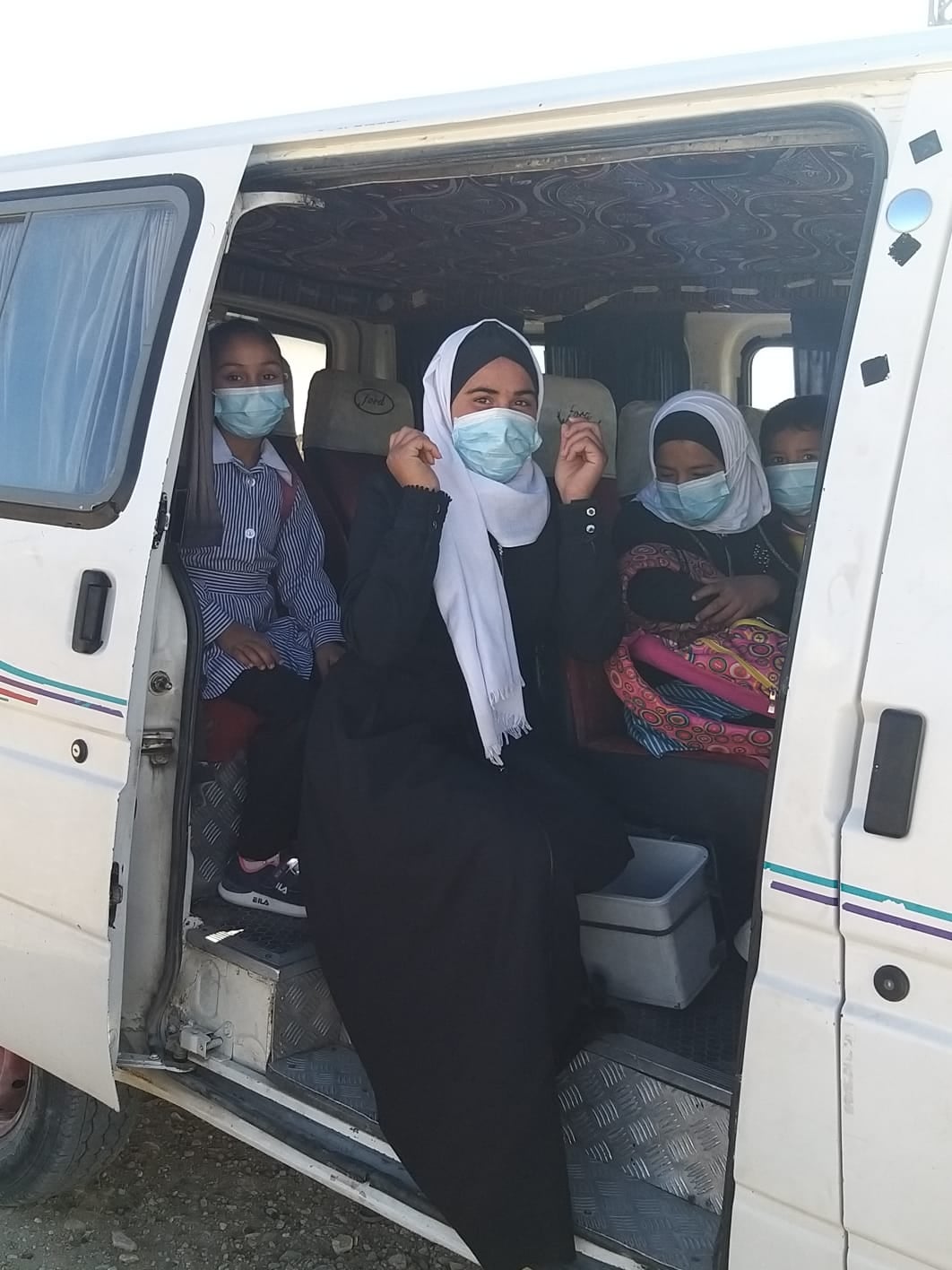
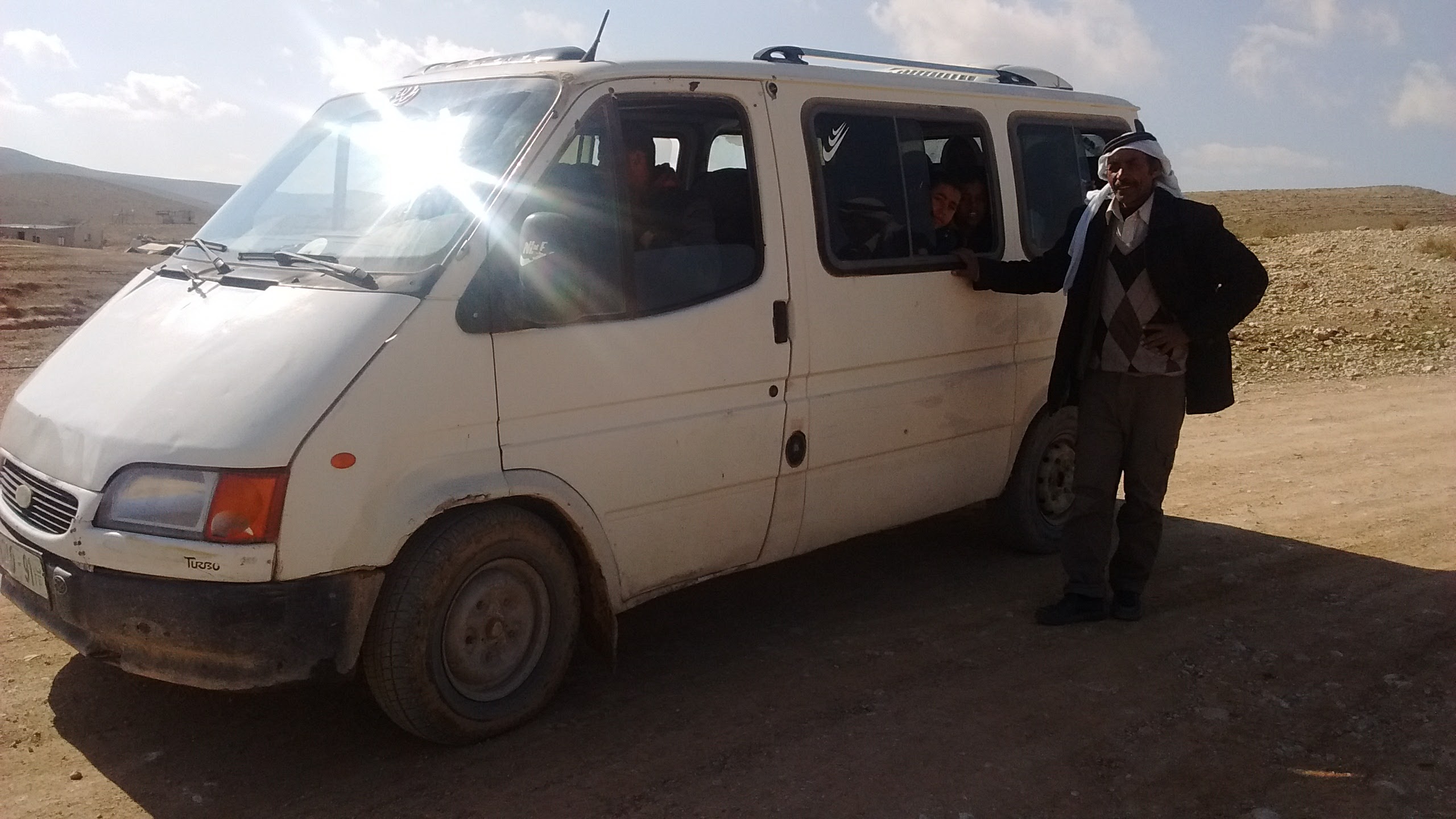
The Dkaika education access project provides safe school- transport for young learners and to a number of young women who attend university. Friends of Hebron have been supporting driver wages and vehicle costs since 2014 and fundraising continues to support this project.
The village of Dkaika had an urgent need to support young students through the transition into high school and university by providing a school transport scheme. We help fund their project which helps students continue with their education by providing transport to the closest high school and university. Young women, in particular have benefited from this opportunity to continue with their education as, prior to this they could not travel safely outside the village.
Demolitions & Vulnerabilities
The community is located on the last piece of land in the South, separated by only a few meters the Green Line.
The vulnerability of the community stems from a number of factors including;
- In 2014 the community received more than 35 demolition orders in one day.
- The fact that the community is located in the furthest point in the West Bank means a large number of the most basic services are not available including electricity and running water.
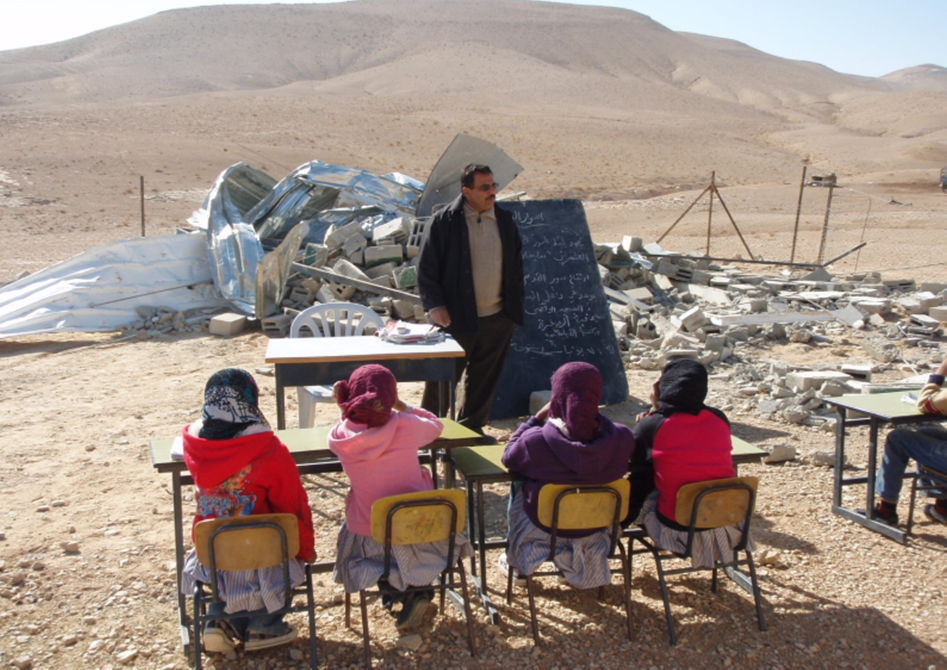
- The community is vulnerable to demolitions – in 2008, 4 houses and a classroom were demolished. Concerns that demolitions will start in the near future have arisen as the Israeli occupation forces have rejected a Master Plan that would have (in case it was accepted) rendered all demolition orders null and void, thus allowing building in the area. The fact that the Master Plan was rejected can be seen as a prelude for further demolitions.
- The community is suffering from high unemployment and poverty rates as it receives the lowest precipitation in the southern parts of the West Bank.
Why education is the key in Dkaika
Inability to access education facilities for young women has led to the increase in the incidents of early marriage for the females, contributing largely to the cycle of poverty and lack of education the community has been plagued with for a long time.
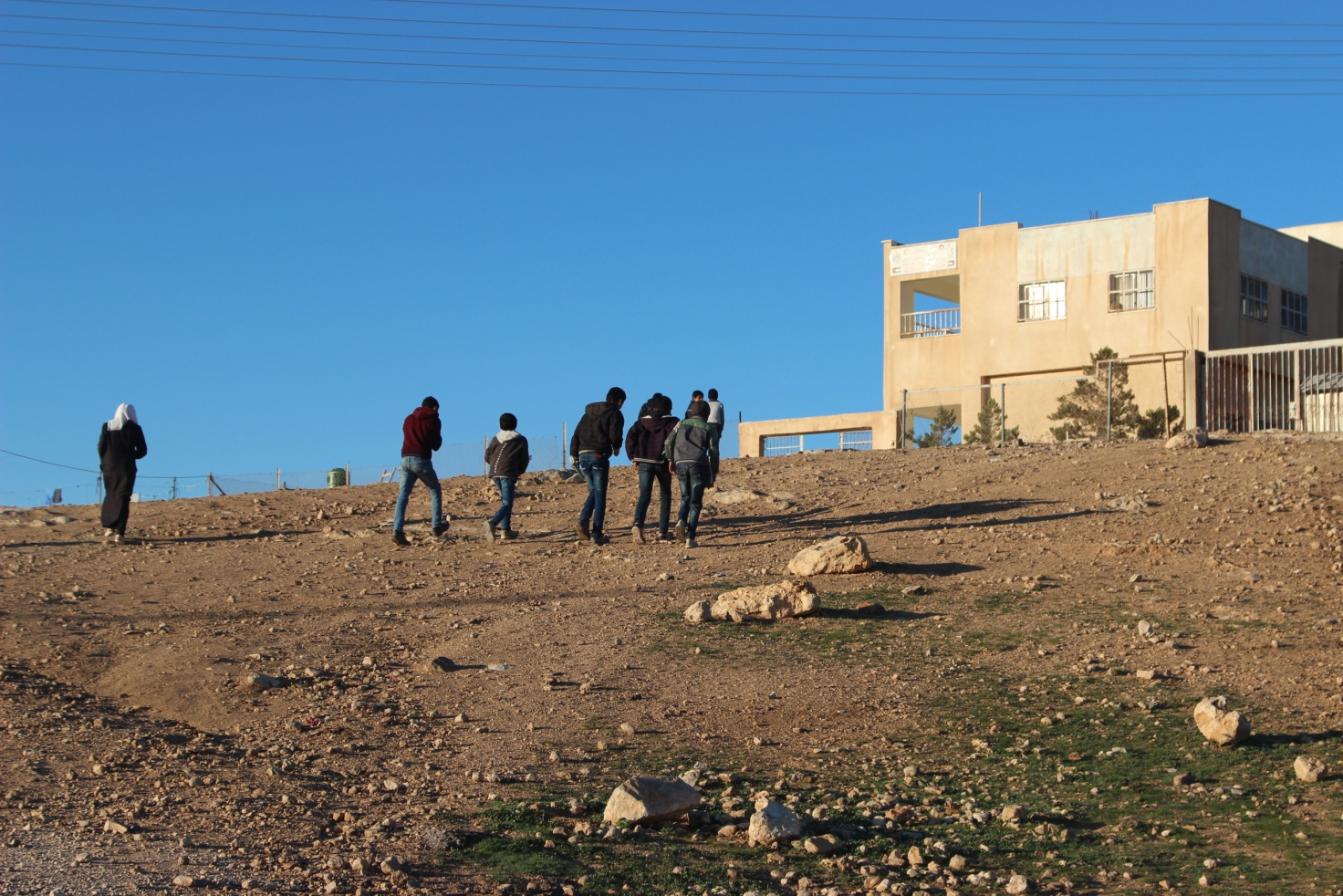
The community has one school that offers education only until the 6th grade, allowing the community to survive with the provision very basic education. The problem lies in what comes after the 6th grade. The nearest school from which students can continue their upper level classes (7th grade to 10th) is located in the nearby community of Al Najadah (in yellow in the attached map). Students wishing to continue their high school education (11th and 12th grade) have to go to the community of Umm Al Khair.
The long distance between these educational institutions and the rugged desert road connecting it to the community of Dkaika has meant a daily trip on foot through the mountains. Such a trip has made the participation of (specifically female) students in the educational process less likely. According to a local source in the community, at least 9 female students ended up leaving school after the 6th grade due to the difficulty to reach the nearby school. Moreover, only two female students from the community that have managed to finish their high school education face difficulties reaching university institutions located in the city of Yatta (at least 25 kilometers away).In short, due to its geographical location, the community of Dkaika is facing a targeted campaign of isolation and destruction by the Israeli Army. One way of making it survive is the provision of basic services, including education.
Launching the driver program
The tried-and-proofed solution to support the steadfastness of the population of Dkaika and to assure the continued education (especially the female population) is to provide school transportation. A similar project running in Susiya has kept the residents in the village in spite of the continued efforts by the Israeli Army and the settlers to uproot it. The sister project in Susiya has provided critical access to education, which has resulted in Palestinian families actually coming back to the community. The number of families increased from 15 in 2002 to 25 in the year 2008 and to 45 in the year 2012. HIRN and Friends of Hebron are aiming to duplicate the same effort in Dkaika.
FoH supporting project since 2014
Providing transportation for the student population includes the dedication of a car from the local community to specifically bring students from Dkaika to both schools in Al Najada and Umm Al Khair. This would ensure that:
- the daily hardship of having to walk to both schools would be eliminated
- students (specifically girls) would be granted the chance to continue their education
- the reduction of the chances of early marriage
- the injunction of cash into the community as we are insisting that the driver of the car be a member of the community
- assure the steadfastness of the community in general.
In 2014 a paper issued by the community indicated that 4 female school students will benefit from this service in addition to two female university students along with 10 other male students. In addition, assurances from the community indicated that in case such a transportation is provided, at least two more female students who dropped out of school (due to the long distances they had to walk to reach school) will be willing to go back to school.
 friendsofhebronsydney.org.au